Ideas into practice
Build a character sheet around one consistent identity
A useful character sheet explains how the same character looks from different angles. Start with a reference you can use, agree on the identity and style, and inspect every panel for continuity. The linked template keeps the full set of modules.
Your starting brief opens as an editable draft. Model requests use Credits; opening a draft does not start a generation. Pricing & Credits
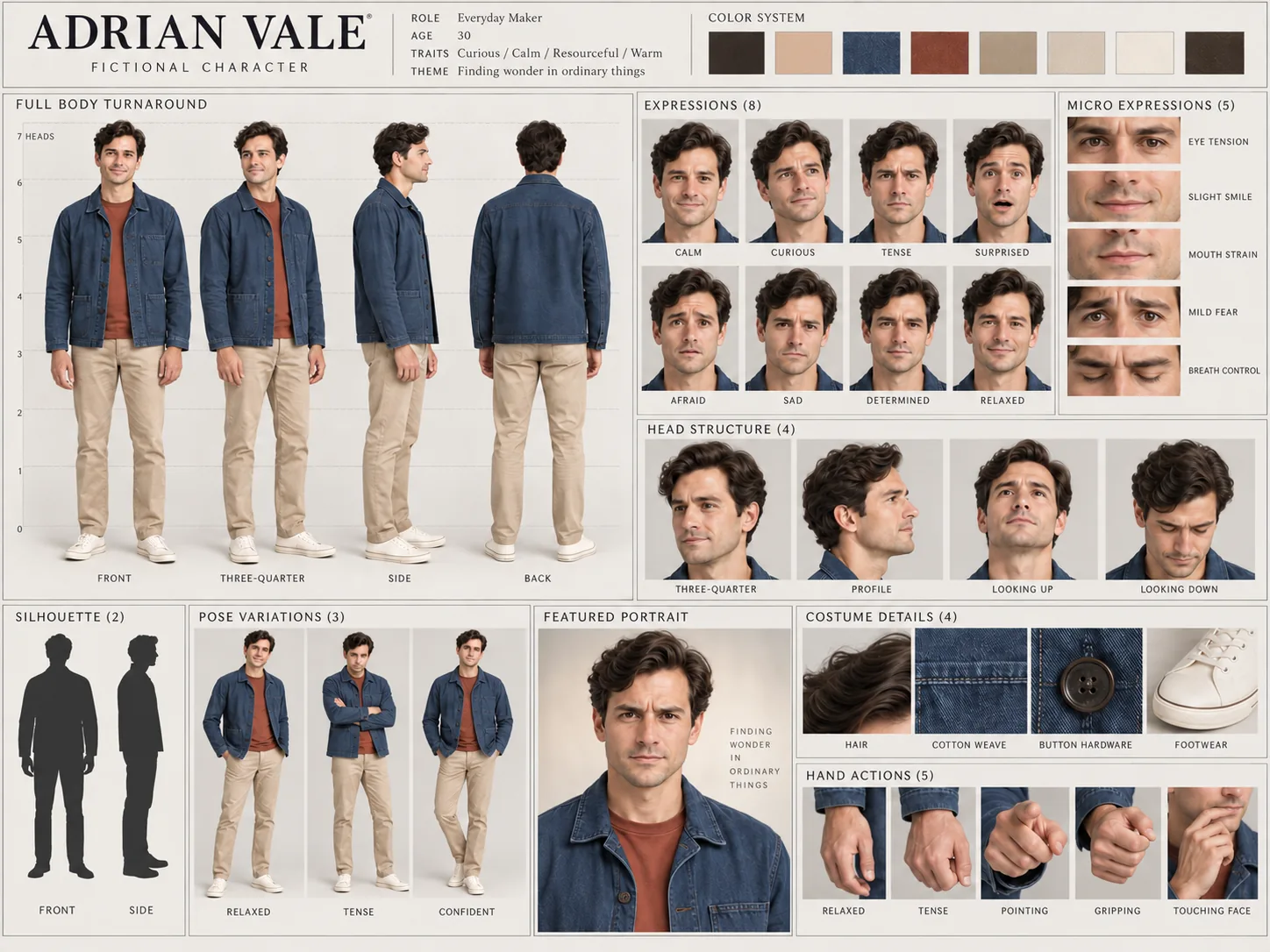
From a first idea to a result
Write down what defines the character
Describe the face, hairstyle, proportions, outfit and distinctive details that must stay fixed. When the reference does not show the back or shoes, decide those details explicitly rather than treating an invented view as evidence.
Keep the complete sheet structure
The detailed template uses a 4:3 board: identity notes, 6–8 colour swatches, four main body views, two silhouettes, eight expressions, five micro-expressions, four head angles, three poses, one close-up, four detail studies and five hand gestures. The main turnaround remains the largest area.
Review panels before building on them
Check the front, three-quarter, side and back views against one another. Correct changes in hair, proportions, seams and accessories. If the board is too dense to inspect, use separate follow-up sheets for details while retaining the approved identity reference.
What to check before using it
- Count every required view and expression; a visually rich board may still omit modules.
- Check hands, eye spacing, clothing construction and colour consistency at full size.
- This workflow generates still images. It does not create a rigged 3D model, guarantee identity matching or export an animated video.
Start with a complete template
Photo to complete character sheet
One character, eleven modules: turnarounds, expressions, micro-expressions, poses and costume details.
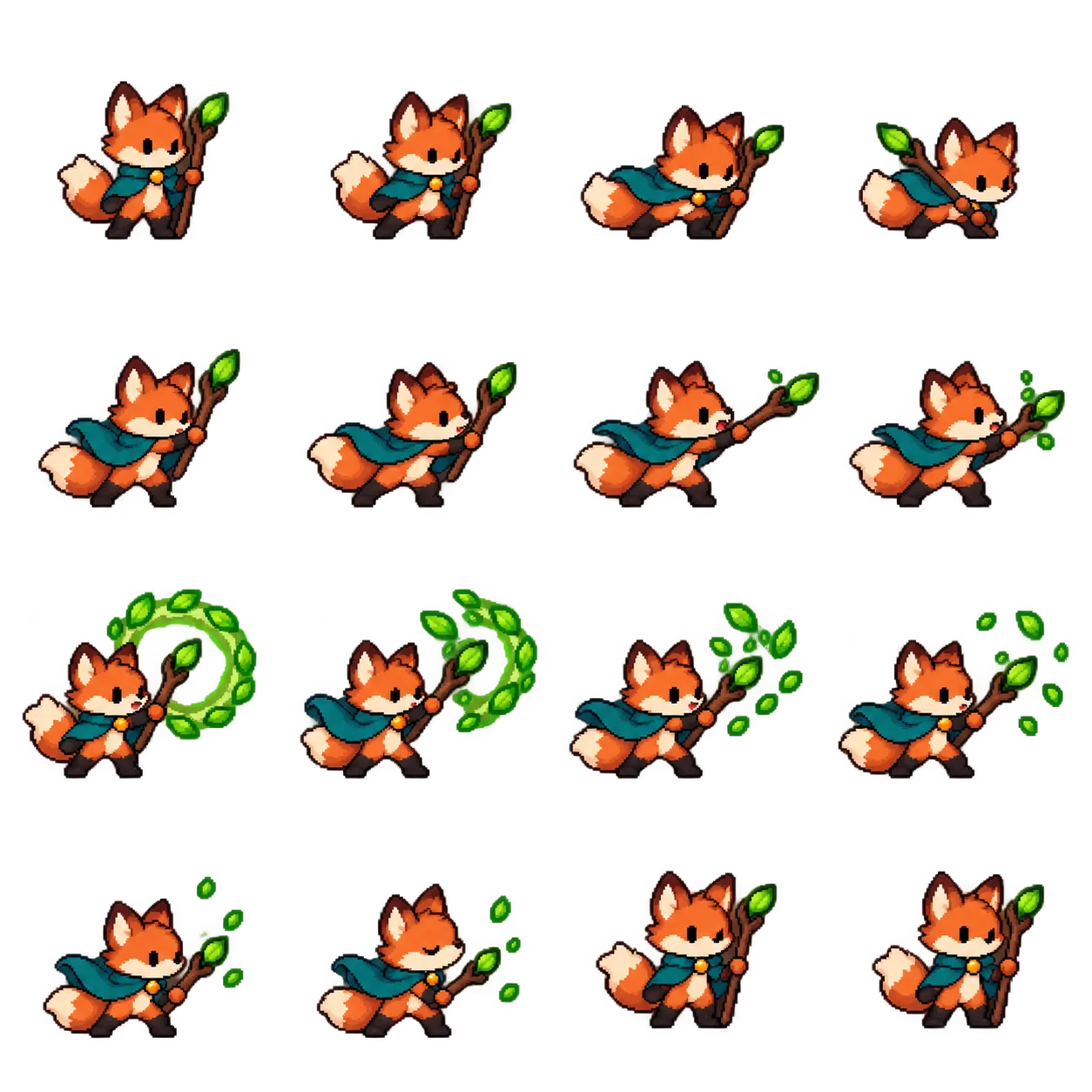
Sixteen frames of a forest spell
An original fox courier performs a complete action across a registered 4 × 4 pixel-art sheet, ready for frame-by-frame review.
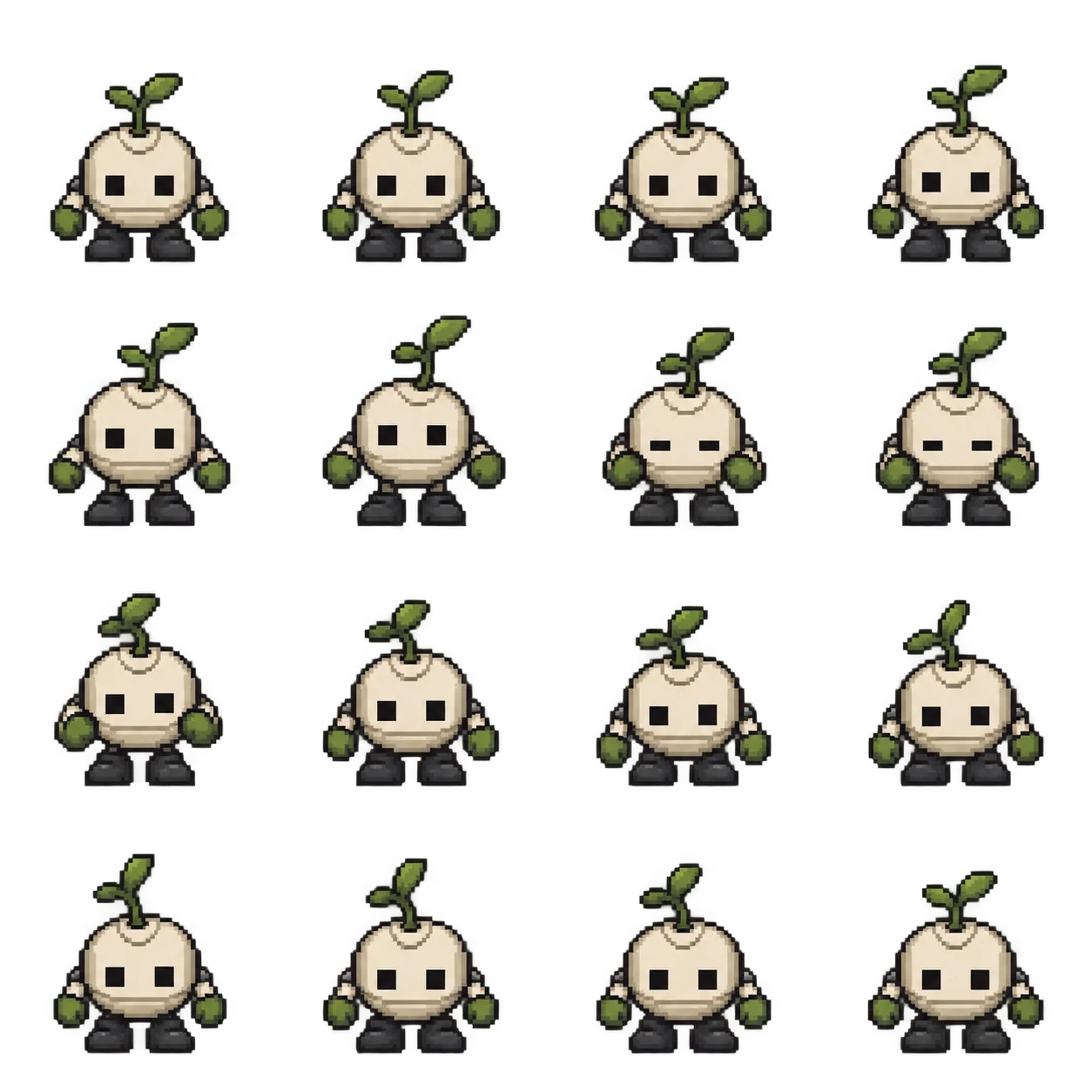
A tiny robot takes a breath
A gentle idle-loop study: 16 distinct pixel poses with a stable baseline, controlled timing and one consistent original character.
Good to know
Can I use a photograph as the character reference?
Yes, if you have permission to use it. Explain which physical details should remain and which style changes are intended. Do not use the result to misrepresent a real person.
Is the detailed prompt available in full?
Yes. Open the character-sheet template below for the complete structure, panel counts and consistency requirements. The page does not replace it with a shortened prompt.
Will every panel be perfectly consistent?
No model can guarantee that. Use the sheet as a draft to review, correct inconsistent panels and keep an approved reference for each later step.