Fix the geometry first
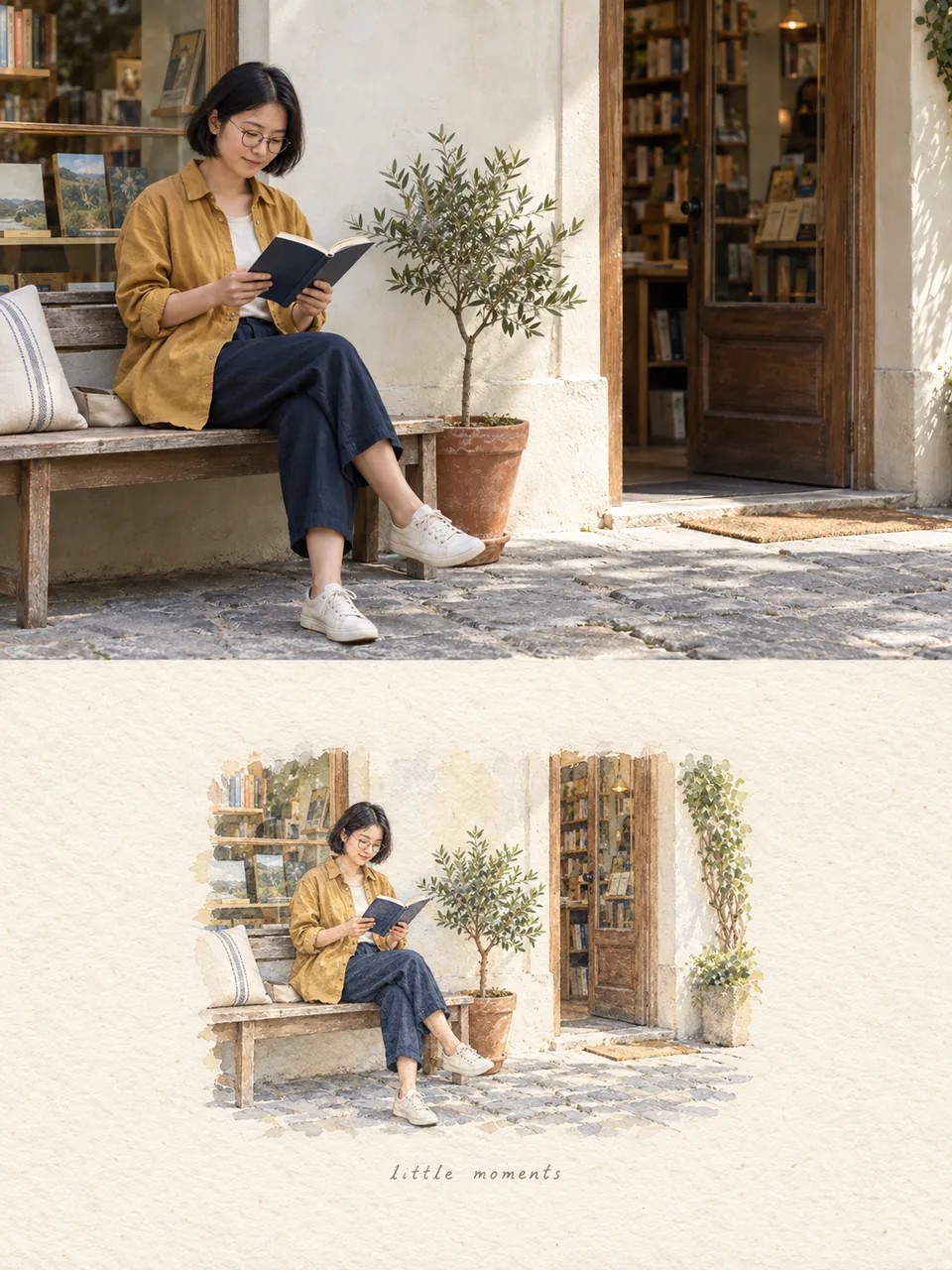
Use a vertical 3:4 page and divide it into equal horizontal halves. The photograph occupies the upper 50%. Warm ivory paper occupies the lower 50%. Within that lower half, ask the miniature to occupy about 25–35% of the area, with a little handwritten phrase beneath it.
The painted area is not supposed to become another full-width picture. That size contrast makes the lower scene feel like a remembered detail. Keep the person, clothing, gesture and a few important background objects consistent between the halves.
Choose a scene worth repeating
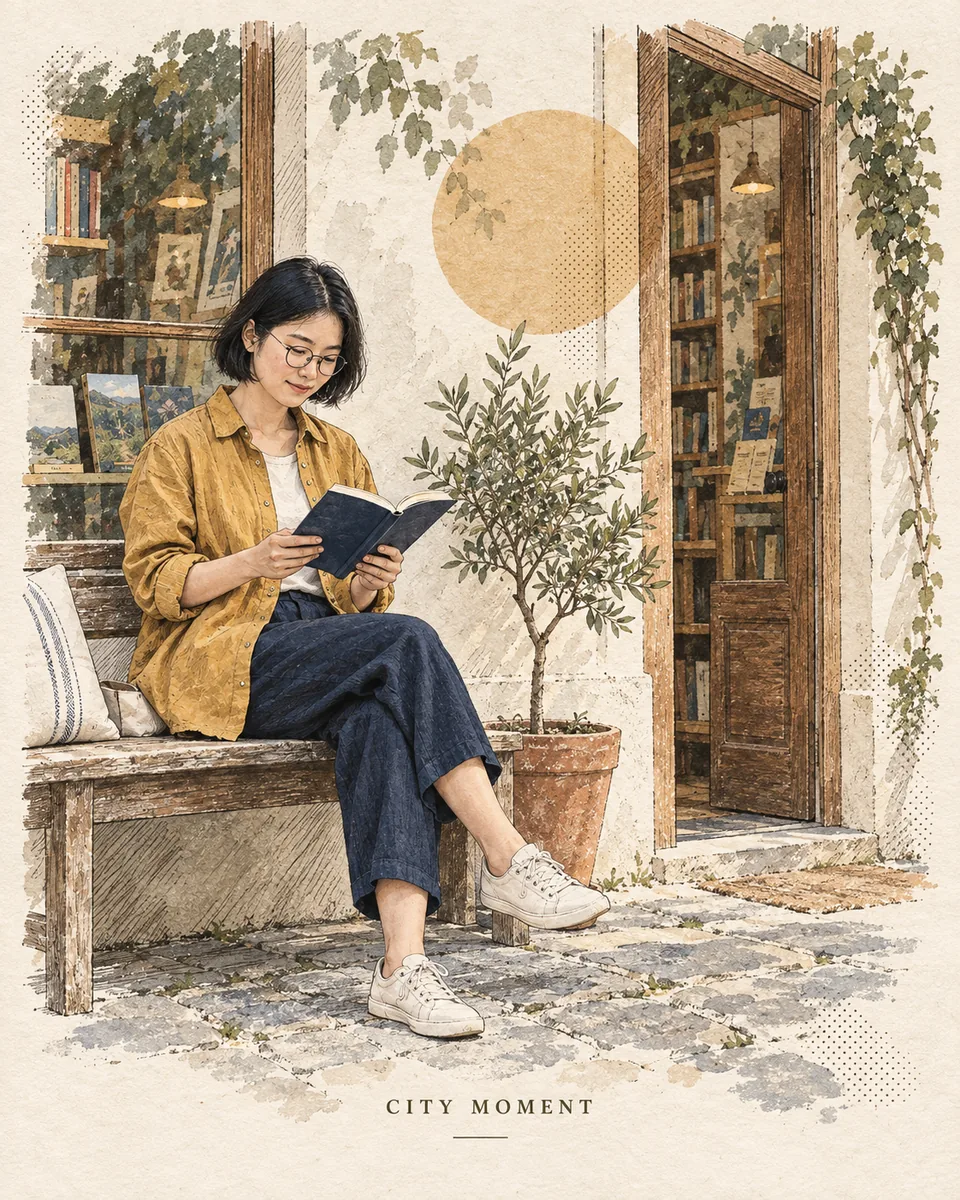
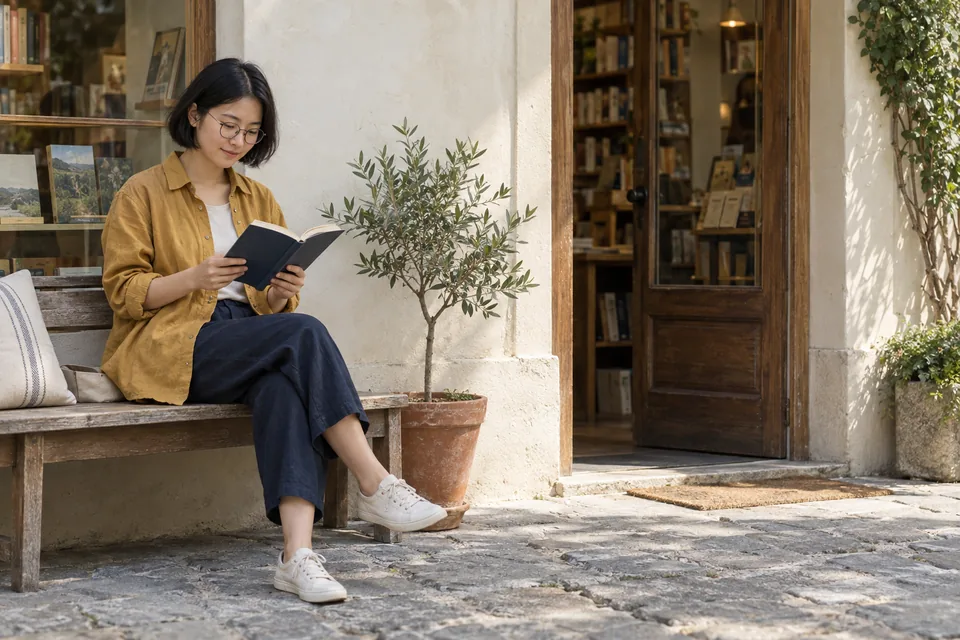
Use your own photo or a photo you have permission to transform. Our original AI reference shows a fictional adult reading outside a bookshop. Glasses, a yellow overshirt, the open book and the tree are the clues that connect both halves. The sample uses “little moments”; change it to a short phrase you actually want, or request no lettering.
Generate, then measure the result
Choose the memory-page template, attach the photo and use the complete prompt below. Start with one image. Inspect the dividing line and the miniature’s bounding area, not just whether the picture feels attractive.
In our generated example, the split is close to the middle but the miniature is larger than the requested 25–35% of the lower area. That is a useful reason to ask for another focused revision: “Keep the upper scene and equal split; make only the lower painted scene smaller and leave more paper.” Prompted geometry is a target to verify, not a guarantee.
If the photograph must remain untouched
An image model can reconstruct the top half even when asked to preserve it. Do not promise unchanged pixels from this generation workflow. For an exact original, generate only the miniature, then use a separate layout editor: create a 3:4 canvas, place the original photo in the upper half without retouching, fit it without stretching, and position the miniature on ivory paper below. Crop only with the photo owner’s agreement, or add padding.
This two-step route also gives exact control over the split, miniature scale and handwriting. Sparkles Editor currently generates the image; it does not provide a pixel-preserving page compositor.
The complete prompt
Keep both media descriptions, the equal split, the miniature scale and the matching-scene checks in the prompt.
One moment, two ways to remember
Make one vertical 3:4 memory page from the attached photograph, split into two exactly equal horizontal halves. This is the same moment shown in two media, not two different scenes. Upper half, 50% of the canvas: retain the supplied photograph as faithfully as the image tool allows. Preserve faces, body proportions, hair, clothes, gesture, lighting, perspective and all important visible objects. Do not beautify or replace the person. Do not crop a head, hand or identifying object; if the photograph has a different aspect ratio, fit it with quiet matching margins rather than stretching it. Keep clean edges without a decorative frame. Lower half, 50% of the canvas: warm ivory handmade watercolor paper with subtle fibers, grain and small organic tonal variations. In its center, paint the exact same scene as a miniature occupying only 25–35% of the lower half. Preserve the number of people, their poses and clothes, the relative locations of the objects, and the original camera perspective. Keep the remaining paper mostly empty. Use transparent watercolor, delicate colored-pencil marks and small opaque gouache accents, uneven handcrafted edges, soft contact shadows and a slightly faded finish. A faint drawn shadow under the miniature should anchor it to the paper without making it a plastic diorama. Under the miniature, place only the words little moments in very small, thin lowercase handwriting, in gray-brown ink. Center this line and keep it visually secondary. Use warm daylight, cream, pale blue, muted denim and warm brown only where those tones suit the reference; keep skin believable, highlights gentle and saturation low. Inspect both halves: they must depict the same person and event. No added people or props, changed outfit, invented action, distorted hands, busy collage decorations, patterned border, logos, watermark or extra text. The photograph must remain visually photographic and the lower scene clearly handmade. This generated page is a creative reconstruction; do not label the upper half as a byte-for-byte unmodified original.
Use this templateInspiration and a further experiment
This layout was informed by Laraib Fatima’s photo-and-miniature post, reviewed on September 24, 2026. We created a different fictional person and our own reference and result.
Try a sequence of memory pages from your own trip: keep the paper tone, miniature size and handwriting consistent while changing the photograph. Use dates or locations only when you supply them. The editorial-print tutorial explores a full-page alternative.
A starter message is filled in for you to edit and send. Chat is billed by usage; clear image requests generate directly and use Credits.