Hand-drawn
One small idea, four little frames
Expressive stick figures tell a story without a wall of text.
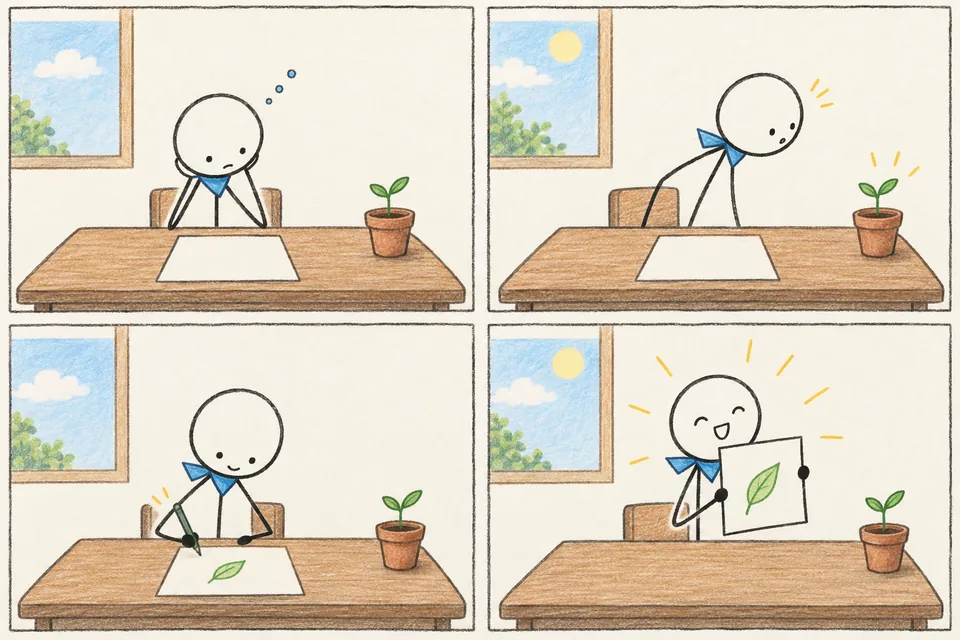
Complete prompt
Subject: A four-panel silent comic with the same stick figure: stares at a blank sheet, notices a sprout at the window, draws one leaf, then happily holds up the tiny drawing. Keep the paper, shirt color and character consistent. Landscape 3:2. Visual style: Hand-drawn stick-figure comic. Figures must use true stick-figure anatomy: a normal-to-small round head approximately one quarter to one third of the total figure height. The neck, torso, arms and legs are primarily single thin black lines. Shoulders, elbows and knees are expressed only by bends in the lines; hands and feet are extremely simple. Facial features are just two small black-dot eyes, short-line eyebrows and a minimal mouth; hair is a simple flat fill. Express posture through the line skeleton’s tilt, bends, center of gravity and limb direction. Use thin black handmade lines that are slightly irregular but clear and restrained. The upper body or clothing uses very simple geometric color blocks. Backgrounds are low-detail cartoons appropriate to the subject, with some areas left empty. Layout: Comic storyboard. Layout: Four-Panel Kishōtenketsu, four equal panels sequentially presenting introduction, development, twist, and punchline, ideal for short comedic stories. Let this storyboard mechanism determine the page structure, reading flow, panel hierarchy, and pacing; output a complete single-page comic where panels tell a continuous story with consistent characters. Palette: Theme color: Cerulean Blue. Cerulean blue with pale warm accents and cream paper. The subject brief is the sole source of content; style changes rendering only. Do not add unrequested brands, characters or artist signatures. Retain every requested module, quantity, action, composition, detail and constraint; do not summarize them away. Explicit user content, exact copy, color and no-text requirements take priority. A selected palette overrides only the style’s default colors, preserving its other characteristics. If the subject requests no text, draw no lettering, even in a layout with text areas. Otherwise integrate typography into the composition. Preserve any exact copy in the brief; otherwise develop meaningful copy in the subject’s language instead of literally describing the picture. For conceptual subjects, design a human or nonhuman visual metaphor first, then integrate words and image into one composition. Never shorten supplied copy unless asked. Use only supplied places, data and facts; never invent opening hours, prices or distances.