손그림
좋아하는 장소를 작은 지도에
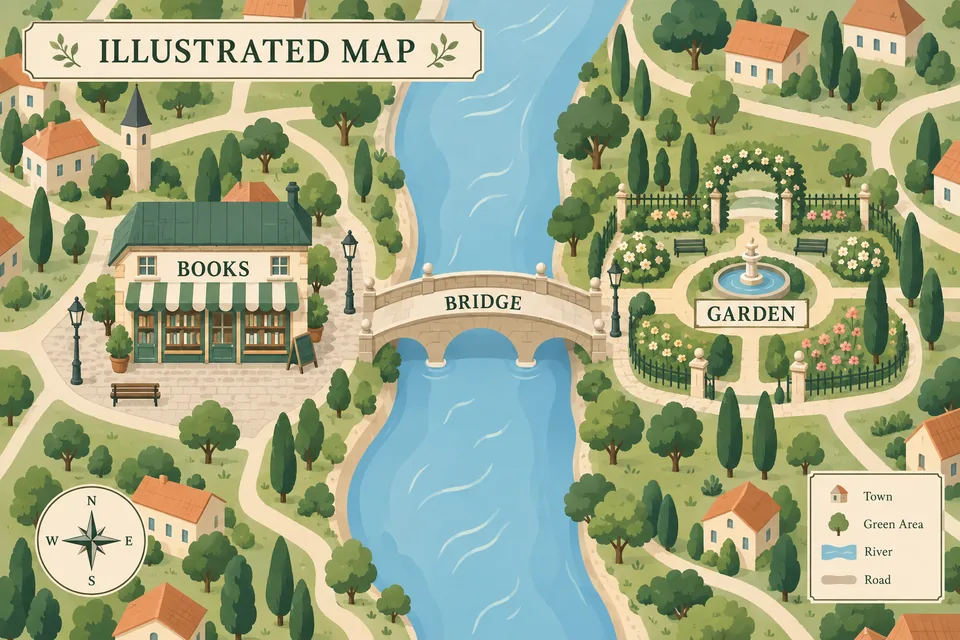
깔끔한 일러스트 지도입니다. 실제 장소에는 직접 준비한 지도를 참고 이미지로 넣어 주세요.
전체 프롬프트
Subject: 가상의 작은 마을에 “그림 안내도”라는 제목을 명확하게 넣어 주세요. 중앙을 세로로 흐르는 강, 서쪽 강변의 서점, 동쪽 강변의 정원, 양쪽을 잇는 다리. “서점”, “정원”, “다리”만 표기. 가로 3:2. Visual style: Clear contours and broad flat-color shapes construct the forms. Moderately simplified, rounded geometric shapes retain the key identifying features. Use no more than two flat values per region, with crisp hard-edged shadows; express depth through contrasts in value, color temperature and the relative areas of color blocks. Bright, fresh, soft, airy colors and a pure smooth surface. Minimalist, concise and modern, with the light character of contemporary commercial and editorial illustration. Layout: Xiaohongshu infographic. Layout: real map with annotations, using an authentic map outline, streets, waterways, or regional relationships as the main visual. Place location markers, very short explanations, and a few small icons on the map. Keep annotations away from important features, maintain clear hierarchy, and use a simple legend rather than a dense list. Palette: Theme color: Sage Green. Sage green with warm sand and ivory. The subject brief is the sole source of content; style changes rendering only. Do not add unrequested brands, characters or artist signatures. Retain every requested module, quantity, action, composition, detail and constraint; do not summarize them away. Explicit user content, exact copy, color and no-text requirements take priority. A selected palette overrides only the style’s default colors, preserving its other characteristics. Preserve the spatial relationships of the supplied map. Without a map reference, label it as schematic; never claim geographic accuracy. If the subject requests no text, draw no lettering, even in a layout with text areas. Otherwise integrate typography into the composition. Preserve any exact copy in the brief; otherwise develop meaningful copy in the subject’s language instead of literally describing the picture. For conceptual subjects, design a human or nonhuman visual metaphor first, then integrate words and image into one composition. Never shorten supplied copy unless asked. Use only supplied places, data and facts; never invent opening hours, prices or distances.